


Anyone can experience a helminthic infestation.Children - when attending kindergarten, adults - for other reasons.Despite all preventive measures, you should know the signs of worms in humans in order to notice the disease in time and begin to treat it.What types of worms are there, where they settle and how they manifest themselves – let’s look at them in more detail.
What organs can worms affect?
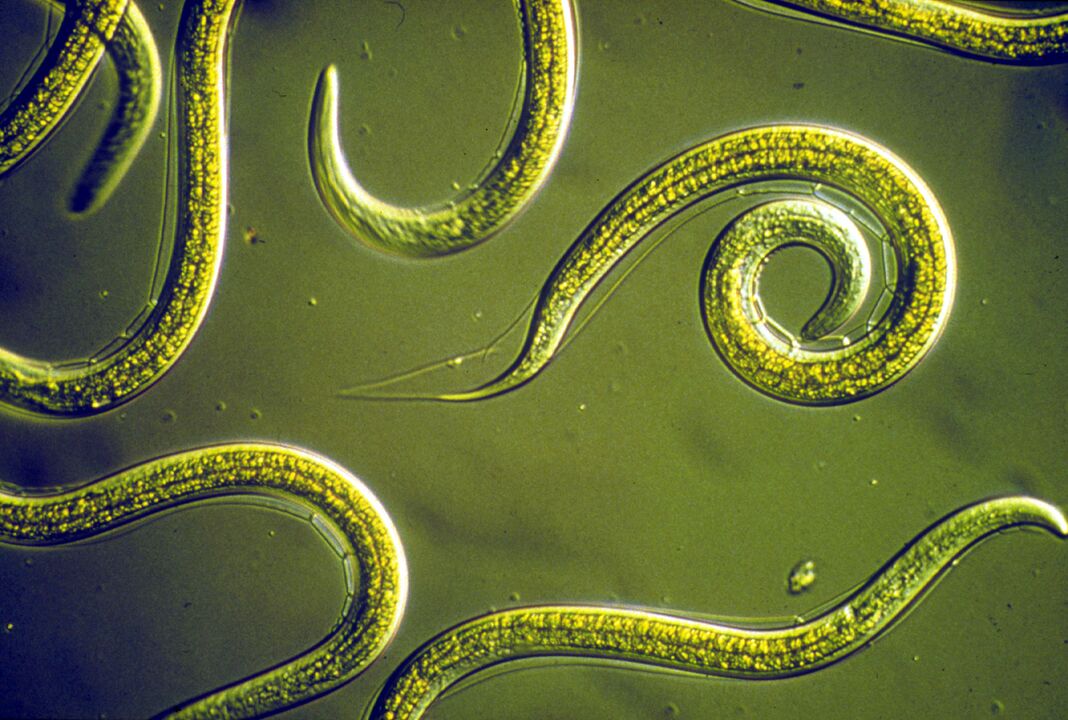
There are two types of invasions: cavitary and tissue.Depending on the species, habitats are also divided:
- Cavity worms settle in the small and large intestines.In particular, the first sections of the small intestine are affected by broad tapeworm, hookworm, and roundworms.The lower part of the small intestine is the habitat of the dwarf tapeworm and pinworm.The large intestine most often becomes the habitat of the whipworm.
- Tissue helminths affect organs of any type: liver, brain, lymph nodes, bile ducts.
Important!It is impossible to determine signs of the presence of worms in a patient at the initial stage of development of the infestation.While the number of worms is small, toxic poisoning by waste products is within normal limits, the body itself copes with the invasion.The appearance of characteristic or acute symptoms indicates a significant increase in the number of helminthic infestations: the maturation of individuals and their dynamic development.
Types of tapeworms
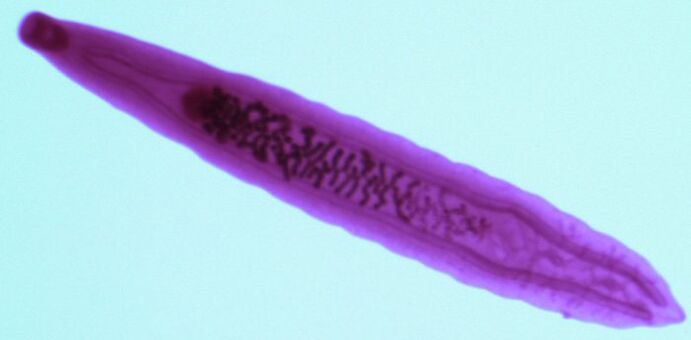
When determining the signs of worms in adults, you should understand what kind of invasion we are talking about:
- Whipworms.The tapeworm was named for its thread-like body with a thickening at the posterior end.The life cycle of parasites is direct.Habitat: tropics, subtropics.Tapeworms are localized in the cecum, making them difficult to eradicate.
- Nematode.A suborder of roundworms that live in nature and the human body.The most famous representatives: roundworms, pinworms.
- Fluke.Flat-type flukes.They pose a huge threat to the host’s body, as they are able to settle in any organ or system.Representatives: schistosomiasis, opisthorchiasis worms.
- Pork tapeworm (tapeworm).Tapeworms are hermaphrodites.Having strong hooks on the head for attachment to the walls, they can affect the brain, intestines, liver, eyes, and muscles.Consequences of non-treatment: paralysis, death of the carrier.
All types of worms are found in the human body.Having fallen ill with ascariasis, enterobiasis, diphyllobothriasis, the patient experiences a lack of nutrients, the intestines cease to normally absorb food debris.Consequences of invasion: metabolic disorders, neurohumoral reaction.
Some facts about the routes of infection:
- Ascariasis – unwashed vegetables, fruits, hands;
- Raw or lightly salted fish, caviar – diphyllobothriasis;
- Pinworms are a household contact method.The development period is up to 60 days, after which a chronic phase of invasion is observed, characterized by decreased immunity and a high incidence of infectious diseases and exacerbations of chronic processes.
Signs of worms in humans
General symptoms of worms in adults depend on the point of localization of the helminths.The main danger is represented by parasites that settle in vital organs.Worms appeared, the symptoms were subtle: weakness, cough.And although a full diagnosis requires an examination.However, there are a number of signs by which you can determine where the worms are located and whether they exist at all.
Brain

Most often there are no obvious symptoms, but if worms live in a person’s brain, the patient may experience:
- constant attacks of nausea;
- frequent vomiting;
- severe weakness;
- lethargy;
- decreased visual acuity and hearing;
- changes in body temperature for no apparent reason;
- epilepsy.
Fact!Most often, parasites in the brain are discovered only after an autopsy.
In the body

Hundreds of known species of parasites can take up residence in a patient's body.It is difficult to determine the presence of worms in the body of an adult.Symptoms vary by area of localization: in the heart, liver, lungs, under the skin.General signs of worms in an adult:
- muscle and joint pain;
- deterioration of skin condition;
- weight fluctuations: loss or gain;
- severe constant fatigue;
- immediate decrease in immunity.
Fact!Some worms have the ability to crawl from the anus to the perineum, penetrate through the bloodstream into other organs, appear in the abdominal cavity and infect the nose and ears.
In the intestines

The most common worms in humans, the symptoms of which are more obvious, can be in the large and small intestines.Infection occurs through the mouth, through contact.The period of development of the larva and adult from the egg is carried out in the intestinal mucosa.The parasite takes nutrients for itself, blocking their absorption by the intestines.Because of this, intestinal problems appear, which are caused by helminths in adults.Symptoms:
- the stomach is often bloated;
- stool is disturbed;
- flatulence appears;
- body weight changes;
- I constantly and strongly want to eat.
Of course, with worms, the symptoms may be different and may develop characteristic signs of gastric diseases, if the patient has any.This is why correct diagnostic measures are so important.Only a specialist will determine with accuracy: where the worm is located, the type and dynamics of development of the invasion.
Signs of helminthiasis depending on the type of parasite
Symptoms of worms in an adult may differ from the symptoms of children.Strong immunity fights off invasion, but the child does not have this feature.Knowing the signs of the presence of worms in a person, it is easier to understand the cause of the ailment and, at the first suspicion of infection, consult a doctor.An infectious disease specialist, parasitologist, helminthologist - a specialist of the required profile will quickly figure out where worms live in the human body and how to get rid of them.
Each parasite provokes the appearance of its own symptoms:
- tapeworms cause intestinal problems: loss of appetite, sleep disturbance, flatulence;
- from round ones - cough, bloating, gas formation, loss of appetite.
Important!Roundworms or roundworms grow up to 40 cm in length and are able to easily move along the intestinal walls and live in the lungs and liver.This is a very dangerous infestation that should be gotten rid of.
Regardless of whether tapeworms or roundworms have settled in the human body, they need to be removed.Even in a minimal amount, the invasion can cause severe harm to the body, and in large quantities the parasites poison the host and often lead to the death of the patient.Knowing where worms live, do not rush to attribute frequent bloating to ordinary indigestion; perhaps this is a sign of helminthiasis, which means it’s time to see a doctor.